A Tyre Pressure Routine For Safer Everyday Driving Checklist For First Time Readers
A practical step-by-step guide to a tyre-pressure routine for safer everyday driving checklist for first-time readers, including preparation, instructions, common issues, tips, and next steps.
A Tyre Pressure Routine For Safer Everyday Driving Checklist For First Time Readers
This guide provides a clear, step-by-step routine to check your tyre pressure for safer everyday driving. Designed for first-time readers, it explains why each step matters, how to do it correctly, and what to watch out for. By following this simple checklist regularly, you can improve fuel efficiency, extend tyre life, and reduce the risk of accidents. The routine takes about 10 minutes and needs only a reliable pressure gauge and access to the recommended pressure for your vehicle.
Fast Answer
- Check your tyre pressure at least once a month and before long trips, using a reliable gauge when tyres are cold.
- Adjust pressure to the vehicle manufacturer's recommended level, which is found in the owner's manual or on a sticker inside the driver's door frame.
Before You Start
- Obtain a quality tyre pressure gauge. Digital gauges are easy to read, but a good stick-type gauge is also accurate. Avoid cheap pencil gauges that can be inaccurate.
- Find the recommended tyre pressure for your vehicle. Look in the owner's manual or on the sticker inside the driver's side door jamb. The number is typically in psi (pounds per square inch).
- Make sure tyres are cold, meaning the vehicle has not been driven for at least three hours or has been driven less than one mile. Warm tyres give a false high reading.
- Have a source of air available, such as a gas station air pump or your own compressor. Also keep a valve cap remover handy if needed.
Step-by-Step Instructions
Gather the Correct Tools and Information
Start by collecting the tools you will need for the tyre pressure check: a reliable pressure gauge, a valve cap remover if necessary, and access to an air compressor or a gas station air pump. Next, find the recommended tyre pressure for your vehicle. This is usually listed in the owner's manual or on a sticker located on the driver's side door jamb, inside the fuel filler door, or in the glove box. The pressure is often given for both front and rear tyres, and may differ based on load. Note these numbers before you begin. Do not use the maximum pressure printed on the tyre sidewall, as that is not the correct setting for everyday driving. Taking a moment to prepare properly ensures that you get accurate readings and avoid under- or overinflating your tyres.
Check for Visible Tyre Damage
Before you measure pressure, visually inspect each tyre for any obvious signs of damage. Look for cuts, punctures, bulges, or cracks in the rubber. Also, examine the tread for uneven wear. Place your hand on the tread and run it across the tyre to feel for any nails or other embedded objects. If you detect any damage, do not simply inflate the tyre; consult a professional tyre technician to assess whether it is safe to use. A damaged tyre can fail suddenly, even if the pressure is correct. This quick inspection takes less than a minute per tyre but can prevent a dangerous blowout. If you see any damage, address it before proceeding with the pressure check.
Measure the Current Pressure on Each Tyre
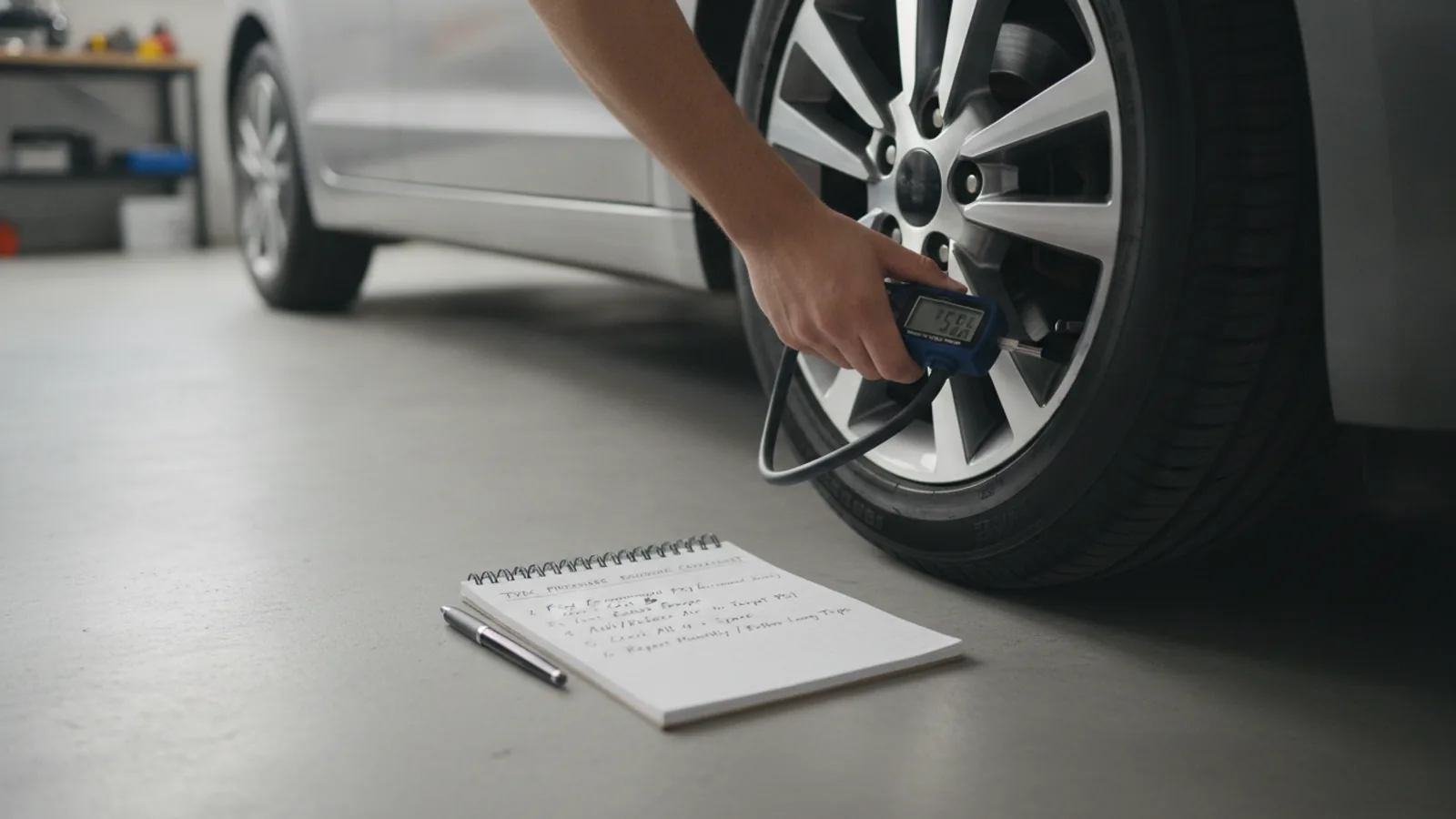
Now, remove the valve cap from the valve stem on your first tyre, which is typically located on the wheel's inner rim. Press the pressure gauge firmly onto the valve stem so that no air escapes. You will hear a hiss if the gauge is not seated properly. Read the gauge immediately. The reading will show the amount of air pressure in pounds per square inch (psi). Write this number down for each tyre, including the spare if you have one. Repeat this process for all four tyres, and ideally for the spare as well. Compare each reading to the manufacturer's recommended pressure. If the measured pressure is lower than recommended, you will need to add air. If it is higher, you will need to release some air.
Add Air to Reach the Recommended Pressure
If the pressure in a tyre is lower than the recommended level, use an air compressor at a service station or your own. Begin by adding air in short bursts: press the air hose nozzle firmly onto the valve stem for a few seconds, then check the pressure again with your gauge. Avoid overinflating, as adding too much air is just as problematic as not enough. Keep repeating the process: add air, check pressure, until you reach the exact recommended psi. If you accidentally overinflate, let some air out by pressing the small pin in the centre of the valve stem with the back of your gauge or a small tool until the pressure drops to the correct level. Always double-check the pressure with your own gauge, as the calibration at the pump may not be accurate.
Recheck All Tyres and Replace Valve Caps
After adjusting the pressure, take a final reading on every tyre, including the spare, to confirm that each one is exactly at the recommended level. Do not trust the gauge on the air pump; always use your own trusted gauge for the final verification. Once you are satisfied that all tyres are correctly inflated, screw each valve cap back on tightly. The caps are crucial because they keep out dirt and moisture, which can damage the valve stem and cause slow leaks. Also, take a moment to ensure that no foreign objects are stuck in the tread and that the valve stems are not bent or damaged. This thorough rechecking ensures that you have not missed any tyre and that your adjustments are accurate.
Record the Results and Set a Reminder
Finally, take a few minutes to write down the pressure readings for each tyre and the date of your check. This record helps you see if any tyre is losing pressure more rapidly than others, which could indicate a slow puncture or a valve leak. You can keep a simple log in your glove box or use a notes app on your phone. Compare the current readings to the previous ones to spot trends. If you notice that a particular tyre consistently loses more than 2 psi between checks, have it inspected by a professional without delay. Then, set a regular reminder to repeat this tyre pressure routine. A monthly check is a good rule of thumb, but you should also check before any long trip, when the weather changes, or after hitting a pothole.
Quick Reference
| Situation | Action | Why it helps |
|---|---|---|
| You are about to drive on a motorway for a long trip. | Check the tyre pressure of all four tyres, including the spare, when they are cold, and adjust to the manufacturer's recommended pressure before driving. | High-speed driving combined with underinflated tyres can cause excessive heat buildup, leading to tyre failure and a dangerous blowout. |
| The weather forecast predicts a sharp drop in temperature overnight. | Before the temperature falls, check and adjust your tyre pressures to the recommended level. Recheck after the temperature change if you notice the low-pressure warning light. | Colder air causes the air molecules inside tyres to contract, reducing pressure by roughly 1 psi for every 10°F drop, potentially dropping below the safe operating range. |
| You have driven for a while and suspect that your tyre pressure may be low, but you have no gauge. | Stop at a safe location, use a tyre pressure gauge from your emergency kit or a service station, and check each tyre's pressure when it has cooled down if possible. | Driving on underinflated tyres increases rolling resistance, causing overheating and potential damage. Checking with a gauge is the only reliable way to know the exact pressure. |
Common Issues
- Tyres lose pressure due to natural permeation and temperature changes over time.: Check pressure monthly and adjust as needed. If a tyre repeatedly loses more than 2 psi between checks, have the tyre and valve thoroughly inspected for slow leaks or damage.
- The tyre pressure warning light comes on unexpectedly.: Pull over safely and check all tyres with a gauge. If any tyre is low, inflate it to the recommended pressure. If the light remains on after re-inflating, take the vehicle to a professional to diagnose the issue.
- The pressure reading from the a gas station air pump gauge differs from your own gauge.: Trust your own calibrated tyre pressure gauge. Use the pump's gauge for reference, but always verify with your own gauge before finishing. Adjust accordingly.
Advanced Tips
- Consider using a quality digital tyre pressure gauge with a backlit display for easy reading in low light, and check its calibration against a known accurate gauge once a year.
- Learn to check your spare tyre's pressure regularly – many drivers forget about the spare and find it flat when needed. Include it in your routine, especially before long trips.
- Monitor your tyre pressure when your vehicle is heavily loaded, as the manufacturer often recommends slightly higher pressures for increased load. Check your owner's manual for specific load-dependent pressures.
Final Checklist
- Did you check the tyre pressure on all four tyres and the spare, using a reliable gauge, when the tyres were cold?
- Did you compare each reading to the manufacturer's recommended pressure found in the owner's manual or door sticker, and adjust as needed?
- Did you visually inspect each tyre for any cuts, bulges, or punctures, and did you confirm that all valve caps are secure?
- Did you record the date and pressure readings so you can track any gradual loss over time and set a reminder for next month?
FAQ
How often should I check my tyre pressure?
You should check your tyre pressure at least once a month, and also before any long trip, when you might encounter varying temperatures, or after hitting a significant pothole. Regular monthly checks help catch slow leaks early and ensure your tyres are always properly inflated for safety and efficiency.
What is the best time of day to check tyre pressure?
The best time is in the morning before you have driven anywhere, because tyres are 'cold' at that point. If you have been driving, you need to wait at least three hours after the trip to let the tyres cool down. Cold tyres give the most accurate pressure reading.
Can I rely on the Tyre Pressure Monitoring System (TPMS) to tell me when to inflate?
The TPMS warning light indicates when pressure is 25% below the recommended level, but it is not a substitute for regular manual checks. It may not alert you to a gradual decline until it becomes serious. Always check with a gauge monthly to maintain optimal pressure and tyre health.