Common Mistakes When Planning A Practical Boot Organisation Setup For Family Travel
A practical step-by-step guide to common mistakes when planning a practical boot organisation setup for family travel, including preparation, instructions, common issues, tips, and next steps.
Common Mistakes When Planning A Practical Boot Organisation Setup For Family Travel
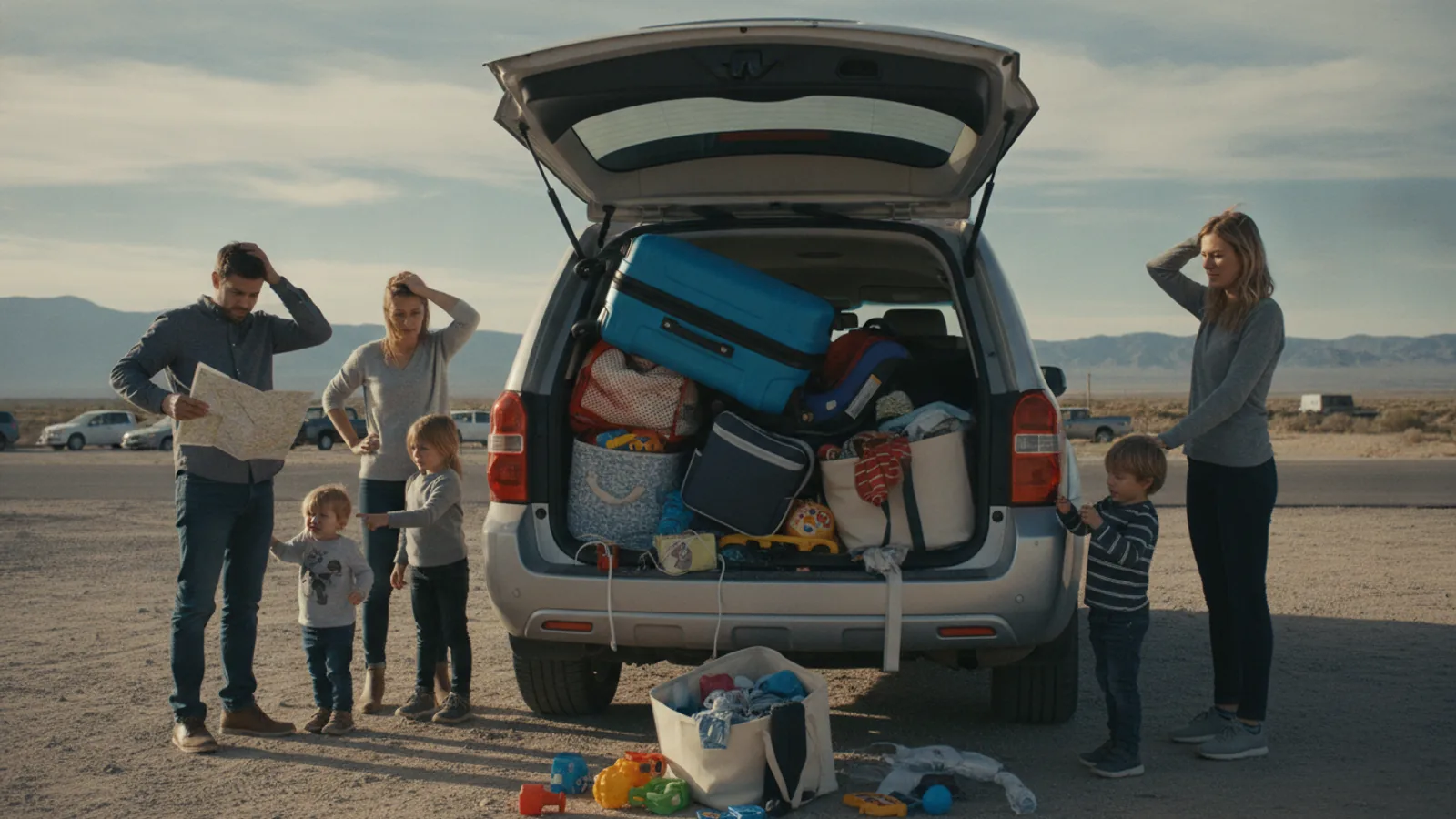
Planning a practical boot organisation setup for family travel is easy to get wrong when you focus on packing volume instead of how your family will access items during the trip. Common mistakes include ignoring the daily sequence of stops, forgetting that children need quick access to comfort items, choosing one large container instead of modular pouches, and failing to secure loose gear so it does not slide or spill. This guide walks you through a step-by-step method to arrange your boot by trip phases, weight distribution, and daily needs. You will learn how to create zones, use compression and soft organisers, and build a loading order that saves time at every stop. The result is a boot that works for snacks, nappies, coats, and camping gear without constant repacking.
Fast Answer
- Stop trying to pack the whole boot in one go. Instead, separate items into daily-use, overnight, and rarely-needed groups, then load the boot from the back to the front so the daily-use items are on top and easiest to reach.
- Put heavy items on the floor, low and centered, then stack lighter soft bags on top. Create three clear zones: one for the kids' comfort items, one for food and drinks, and one for dirty or wet gear, each with its own labelled pouch or box.
Before You Start
- Clear out the boot completely and vacuum it. Then measure the floor space and the height of the boot opening so you know exactly what size of organisers will fit and what will block the rear view.
- Sort every item into three piles: daily access, overnight at a hotel, and emergency or rarely needed. For a family trip, daily access includes snacks, wipes, tablets, and a change of clothes per child.
- Choose soft-sided organisers, collapsible crates, or zip-top bags with handles. Avoid rigid boxes if they cannot be squeezed. Decide on a system of colour-coded labels or tags that everyone can understand.
- Check how your car's load cover works. If you have a parcel shelf or cargo cover, measure how much clearance you have when it is closed. Decide whether you need a hard box or a soft bag that can be compressed.
Step-by-Step Instructions
Measure and Declutter the Boot Space
Start by taking everything out of the boot, including any spare wheel cover, first aid kit, or tools that live there permanently. Vacuum the floor and check the space with the back seats in the position you will use during the trip. Write down the length, width, and height in centimetres, and note the shape of the boot opening—some cars have a slanted roof that limits what you can stack. Also note the location of the latch for the back seat and any tie-down points. This is your practical check: ask yourself if you have enough clearance to close the boot properly when the items are in place. That measurement matters because it tells you which organisers will actually fit and prevents you from buying a box that looks useful but blocks the view or forces the seat to tilt forward. If you have a pram or a large suitcase, measure that too.
Categorise Items Into Zones for the Trip
Divide everything you plan to take into three clear categories: 'reach often' (snacks, water, tablets, wipes, small toys, a change of clothes for each child), 'hotel stop' (large suitcases, overnight bags, toiletries, extra shoes), and 'emergency only' (jumper cables, first aid, reflective triangle, spare blanket). Use a large blanket or the floor of the house to lay out these piles, and involve your partner or older children in the sorting so they know the system. Then count how many separate containers you need per zone. The practical check is to verify that the 'reach often' zone can be accessed without shifting another bag. That matters because if you have to dig under a heavy suitcase to get a biscuit, you will likely give up and let the kids snack on crisps, or you will repack the whole boot every morning and lose time. Keep the 'hotel stop' zone to the back and bottom, and the 'emergency' zone to the sides or under the floor if possible.
Choose Soft Organisers and Bags That Fit the Space
Once you know the dimensions and the zones, pick organisers that are soft-sided and compressible: collapsible fabric cubes, zip-top tote bags, or lightweight plastic crates that can be folded. Avoid rigid suitcases that cannot be flexed, because they waste space and create awkward gaps. For each zone, choose a container that is slightly smaller than the measured floor area but leaves a few centimetres of play, so you can slide it in and out without jamming. The practical check is to test each organisers' height against the boot opening and the load cover. That matters because a too-tall box can prevent the parcel shelf from closing, which reduces your rear visibility and can be a security risk. Also, ensure that the handles are strong enough to lift when the container is loaded—test it by filling it with a few books at home. Write the zone name on the outside of each organiser or use a label maker.
Plan the Loading Order and Weight Distribution
Follow the rule: heavy on the floor, light on top, and frequently used items at the outermost edge of the boot (closest to the boot opening). For most family hatchbacks or SUVs, that means the large suitcase goes flat on the floor, back against the rear seat, and the soft bag with daily items goes on top or in the gap beside it. Put the second suitcase on the side that is opposite to the driver's side to counteract the weight of the driver and the fuel tank. The practical check is to step back and look at the boot layout from the bumper level: you should not see any item that rises above the top of the backrest unless it is secured by a cargo net. That matters because a heavy, loose item on a high shelf can become a projectile in a sudden stop, and also because an uneven side-to-side load makes the car lean when you turn. If you have two small children, put their seat back and load the heavier bags on the floor behind the passenger seat, so that the centre of gravity stays low.
Pack Daily-Access Items on Top and in the Last Few Centimetres
Now load the boot according to the plan. Start with the emergency kit tucked into the very back corner behind the wheel arch, or under the false floor if your car has one. Then place the heavy suitcase(s) on the floor, side by side if possible, with the wheels facing the back of the car. Next, place a soft bag with hotel-stop items on top of the suitcases, but only if it is compressible—check that it does not press down on anything fragile. Finally, put the daily-access bag on top of everything, or slide it into the gap just inside the boot opening. It should be the last bag you load and the first you reach. The practical check is to open the boot, look at the area closest to the opening, and confirm you can pull the daily bag out without moving any other item. That matters because every time you stop for a break, you do not want to unload the entire boot to get a wet wipe. Keep a small separate tote for food and drinks, and place it right on top that you can lift out in one motion.
Secure the Load and Test the Setup Before Departure
Use a cargo net, tension rod, or tie-down straps to weave across the boot and pin the bags against the seat backs. If you have a parcel shelf, close it now and verify it can close without bending. Then get into the driver's seat and adjust the rear-view mirror: you should see out of the back window, not a pile of bags. If you cannot see, re-arrange the top layers to stay below the beltline. The practical check is to drive a short loop around the block to listen for any rattling or sliding. First drive 30 km/h, brake gently, then accelerate. Then find a quiet parking lot, open the boot, and see if anything has shifted more than a few centimetres. That matters because a load that slides even a little can turn a quick brake into a dent in the door trim, and a top-heavy stack can tip over when you round a corner. Re-secure as needed with the straps. This test also tells you if the daily bag is too heavy to lift easily every stop.
Quick Reference
| Situation | Action | Why it helps |
|---|---|---|
| You need a snack or a wipe while driving to the next stop. | Keep a small cloth bag with one drink and one snack per person in the front footwell or under the seat, not in the boot. In the boot, place another identical bag in the daily zone. | This avoids getting out and unpacking the boot on the side of the road; you can hand the front bag back to the kids, and the boot bag stays for longer stops. |
| You have a heavy cooler or a large water container that must stay cool. | Put the cooler on the floor right behind the passenger seat, wedge it with a soft bag on each side, and place a frozen bottle or a towel on top to keep the contents cold. | Keeping it low and snug prevents it from sliding and keeps the centre of gravity lower, so you do not have to hold it with one hand while driving. |
| You arrive at a hotel and need overnight suitcases without unpacking the whole boot. | Load the two 'hotel stop' suitcases side by side on the floor, and tag them with a bright ribbon. When you park, lift them out first, then pull the daily bag out afterwards. | This lets you grab the two large bags quickly and leave the rest of the boot untouched for the next day, saving you time and effort. |
Common Issues
- Children complain they cannot reach their own things.: Create a personal pouch for each child (a small zip-top bag) and attach a carabiner to the back of the seat or the side hook. In the boot, put all these pouches in one labelled container that you hand over at each stop.
- Bags slide into the back seat when you brake.: Use a boot cargo net that hooks to the tie-down points, and pull it taut across the back of the load. Alternatively, place a non-slip silicone mat underneath the bottom layer to increase friction.
- You cannot remember where you put the medication for the kids.: Keep a hard-sided plastic zip-up case for all medications and put it in the emergency zone, but on the very top of that zone so you can find it instantly. Label it with a red tag.
Advanced Tips
- Use compression packing cubes for soft items like clothes to shrink their volume, but remember that compressed cubes are heavier per litre, so place them at the bottom or against the seat back to keep the load stable.
- Install a lightweight roof bag for bulky but light items like sleeping bags or pillows, but only if the roof rack is factory-rated for your car and you check the legal limits for your region—read the vehicle manual and the roof rack instructions.
- Consider using a boot divider or a simple wooden board with a non-slip surface to split the boot into two sections: one for the kids' daily mess and one for clean luggage, so you can seal off the dirty side with a zip-top tarp.
Final Checklist
- Before driving off, confirm that the boot load is below the seat back height so your rear view is clear and the parcel shelf closes easily.
- Test that you can open the boot and pull out the daily bag without moving any other item—if not, reposition and re-secure.
- Verify that every heavy item is on the floor and that the cargo net or straps are tight enough to prevent any slide.
- Give a quick 'tug test' to each bag: if you can move it more than 5 cm with one hand, re-pack and secure it better.
FAQ
How do I keep the boot organised when I have to unpack it at every overnight stop?
The key is to create separate modules: a daily bag, a hotel bag, and an emergency bag. At each stop, you only lift out the hotel bag and the daily bag. Keep the emergency bag in the boot, tucked into a side recess, and leave the heavy suitcases in the boot unless you need them. This way, you never have to unload the whole boot, and you can repack in less than two minutes by just placing the daily bag back on top.
What should I do if my boot is too small to fit a pram and suitcases?
Prioritise the pram and the most essential bags. Use a compact stroller that folds into a small frame, or consider a travel system where the seat comes off. Place the pram on the floor sideways, then stack the suitcases on top, but keep the daily bag in the back seat footwell. You can also use a roof bag for lightweight items like coats or sleeping bags, but check the roof rack limits and the vehicle manual first.
Are collapsible fabric organisers better than hard plastic bins for family travel?
Soft fabric organisers are better in most family trips because they squeeze into odd gaps and can be folded when empty. Hard bins are useful for heavy gear like tools, but they waste space when half-empty and can crack if something heavy falls on them. Choose a blend: use two soft cubes for kids' stuff and one medium hard bin for the emergency kit, but only if it fits snugly on the floor.