Common Mistakes When Planning A Tyre Pressure Routine For Safer Everyday Driving
A practical step-by-step guide to common mistakes when planning a tyre-pressure routine for safer everyday driving, including preparation, instructions, common issues, tips, and next steps.
Common Mistakes When Planning A Tyre Pressure Routine For Safer Everyday Driving
Planning a tyre-pressure routine for everyday driving is more than checking numbers once a month. Many drivers overlook the importance of consistent measurement, proper gauge calibration, and the impact of temperature changes. This guide highlights common mistakes, such as relying on visual inspection or forgetting to check spare tyres, and provides a step-by-step approach to building a reliable routine. By following these practices, you can improve fuel efficiency, extend tyre life, and enhance safety on the road.
Fast Answer
- A proper tyre-pressure routine involves checking pressures at least once a month and before long trips, using a reliable gauge, and adjusting to the manufacturer's recommended settings.
- Common mistakes include neglecting the spare tyre, ignoring temperature fluctuations, and not checking when tyres are cold, which can lead to inaccurate readings and unsafe driving conditions.
Before You Start
- Get a reliable tyre pressure gauge – a digital or dial type that you know is accurate; check its calibration against a known source if possible.
- Keep a small notebook or use a notes app to record pressure readings and dates, so you can track patterns and spot slow leaks.
- Learn the recommended tyre pressures for your vehicle – they are usually listed on a sticker inside the driver's door frame, in the owner's manual, or on the fuel filler flap.
- Prepare to check pressures when tyres are cold – before driving or after the vehicle has been parked for at least three hours, to get a consistent baseline.
Step-by-Step Instructions
Locate the Manufacturer's Recommended Pressure
Start your routine by finding the exact tyre pressure your vehicle's manufacturer recommends for normal everyday driving. Look for a sticker on the driver's side door jamb, inside the fuel filler flap, or in the owner's manual. This value is given in pounds per square inch (PSI) and often differs between front and rear tyres, especially if you carry heavy loads or have a vehicle with different axle weights. Write these numbers down and keep them handy. If you cannot find the sticker, consult your owner's manual or check the manufacturer's website for your specific model and year. Do not use the maximum pressure printed on the tyre sidewall – that is the maximum safe pressure for the tyre, not the recommended operating pressure. Using the wrong pressure can lead to uneven wear and poor handling. By starting with the manufacturer's numbers, you ensure your routine is based on the correct target for your vehicle.
Check Pressure When Tyres Are Cold
To get an accurate reading, check your tyre pressures when the tyres are cold, meaning the vehicle has been parked for at least three hours or has been driven less than a mile at moderate speed. As you drive, tyres heat up from friction and road contact, causing the air inside to expand and the pressure to increase – this can raise the reading by several PSI. If you check hot tyres, you will get a false high reading, which can lead you to let out air unnecessarily, resulting in under-inflation once the tyres cool. Make it a habit to check pressures first thing in the morning before you start your day, or after the car has sat overnight. If you must check after driving, wait at least two hours after a short trip or three hours after a longer drive. Consistency is key – always checking under similar conditions gives you a reliable baseline for identifying leaks or slow air loss.
Use a Quality Gauge and Consistent Technique
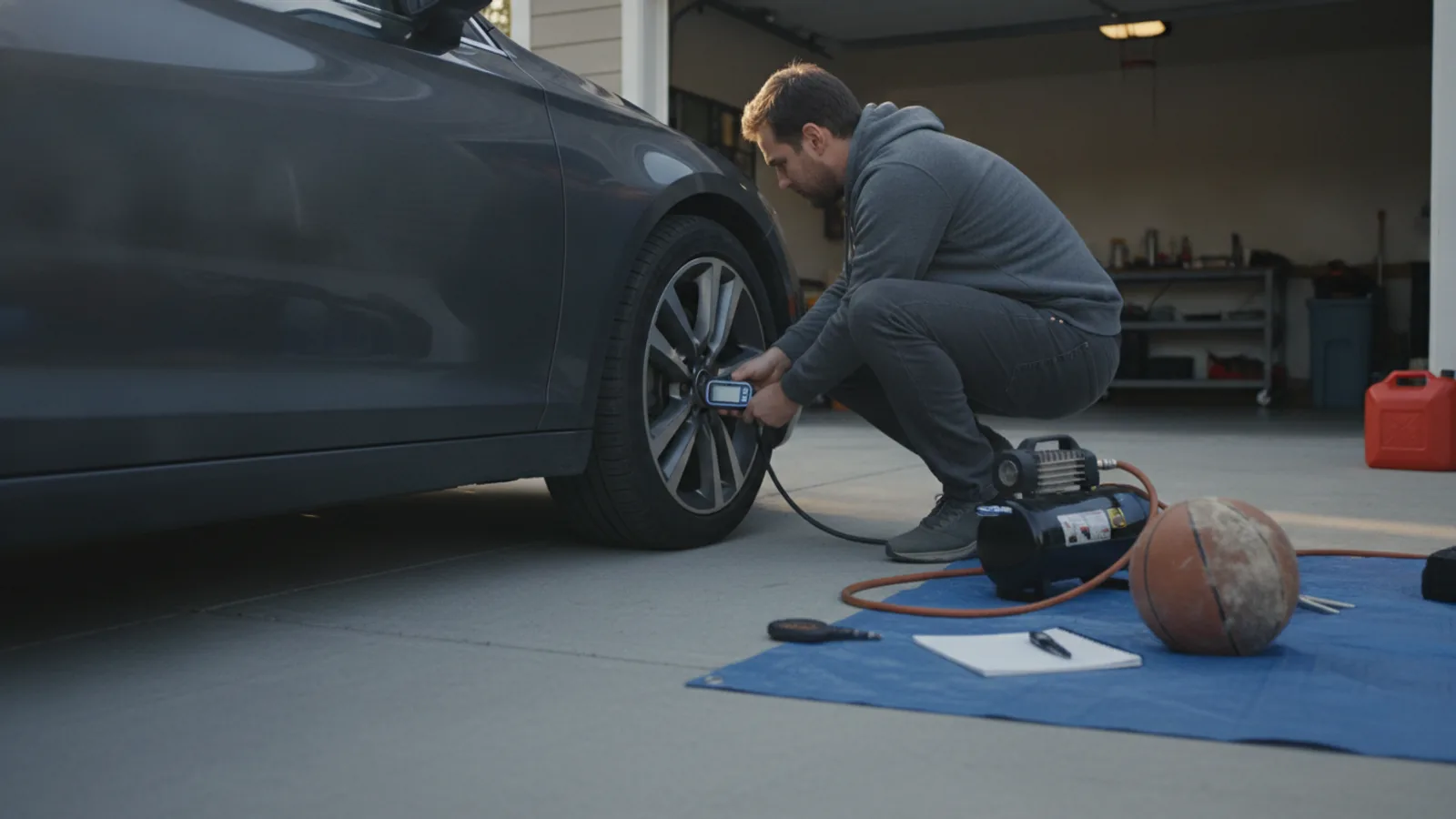
Invest in a quality tyre pressure gauge – either a digital or dial type – and avoid the pencil-style gauges that are often inaccurate. Digital gauges are easy to read, but even they can drift out of calibration, so occasionally test yours against a known-accurate gauge or a garage's air station. When you take a reading, remove the valve cap, press the gauge firmly onto the valve stem so no air escapes, and wait for the reading to stabilise. For digital gauges, this is immediate; for dial gauges, you may need to hold it steady for a second. Record the reading for each tyre and compare it to the manufacturer's recommended pressure. If the pressure is low, add air; if it is high, release air by pressing the small pin in the valve stem. Check again after adjusting to confirm the correct pressure. Using the same gauge and technique every time reduces variability and helps you spot trends in pressure loss.
Adjust Pressures to the Recommended Levels
Once you have readings from all four tyres, adjust each one to match the manufacturer's recommended cold pressure. If a tyre is low, use an air compressor or pump to inflate it – many petrol stations have air stations, or you can buy a portable compressor for convenience. If a tyre is high, release a little air by pressing the pin in the valve stem in short bursts, checking frequently. Be aware that pressures can differ between front and rear axles, so follow the chart precisely. For example, a vehicle might require 32 PSI front and 30 PSI rear – do not equalise them unless the manufacturer says to. Always recheck the pressure after adjusting, because adding air can be imprecise, and you want to avoid over-inflation. Over-inflated tyres have a smaller contact patch, leading to a harsh ride and increased centre-tread wear; under-inflated tyres create more friction, causing overheating and sidewall damage. Proper adjustment not only maximises safety but also improves fuel economy and tyre longevity.
Set a Regular Schedule and Keep Records
The single most important habit is consistency – check your tyre pressures at least once a month and before any long journey. Create a schedule that works for you, such as the first Saturday of every month or the same day you pay your utility bills. Keep a record of each check: write down the date, the pressure for each tyre, and any adjustments you made. Over time, this log will help you identify slow leaks – if a tyre consistently drops several PSI each month, that is a sign you need to have it inspected for a puncture or a leaky valve. Also, note the season: as temperatures drop, tyre pressures decrease (about 1-2 PSI for every 10°F drop), so you may need to add air more frequently in winter. By tracking this, you can anticipate changes and avoid unsafe conditions. A simple notebook or a spreadsheet can serve as your log – the goal is to have a clear picture of your tyres' health, not just to mark a calendar.
Include the Spare Tyre in Your Routine
Many drivers forget to check the spare tyre – but if you experience a flat, a uninflated spare is useless. Your spare tyre requires the same regular pressure maintenance as your four main tyres. Refer to your owner's manual or the tyre sidewall for the recommended pressure for the spare, which is often higher than the regular tyres – sometimes around 60 PSI for full-size spares, while space-saver 'donuts' may have a different rating. Check the spare at the same time as your other tyres, even if it is stored in the boot or under the vehicle. Make sure you know how to access it and have the necessary tools, such as a jack and wrench, in good condition. Also, be aware that spare tyres age, and even if they hold air, rubber degrades over time – inspect the spare for cracks or bulges and replace it if it is over six years old, regardless of tread depth. A spare that is in good condition and properly inflated can be a lifesaver, so include it in your routine without fail.
Quick Reference
| Situation | Action | Why it helps |
|---|---|---|
| You are about to leave for a long motorway trip and the weather has been hot. | Check the tyre pressures when the tyres are cold, even if the trip is only a few days away. Adjust them to the manufacturer's recommended cold pressure. Do not let air out of hot tyres – wait until they cool, or add air if they are low. | Hot tyres show higher pressure readings because heat expands the air; letting out air based on a hot reading can lead to under-inflation when the tyres cool, which increases wear and could cause a blowout. |
| You discover one tyre is consistently losing 3 PSI each month, even after topping it up. | Take the tyre to a professional to have it inspected for a slow puncture, a leaky valve, or a bead leak. Do not just keep adding air – you may mask a dangerous condition that could lead to a sudden failure. | A tyre losing pressure at a steady rate indicates a slow leak, which can be caused by a small nail or a corroded rim. Ignoring it increases the risk of driving on an under-inflated tyre, which wears unevenly and may overheat. |
| You have a modern car with a tyre pressure monitoring system (TPMS) and the warning light is not on. | Still check the pressures manually at least once a month. Use a gauge to verify each tyre is at the recommended cold pressure, and note that some systems only warn you when pressures are significantly low, not when they are slightly below optimum. | A TPMS is a helpful backup, but it requires the sensors to be functional and may not trigger until a tyre is 25% below the recommended pressure. Regular manual checks catch gradual leaks and ensure all tyres are properly inflated for fuel efficiency and handling. |
Common Issues
- Using the maximum pressure printed on the tyre sidewall instead of the vehicle's recommended pressure.: Always refer to the vehicle manufacturer's recommended pressures, which are usually on a sticker in the driver's door jamb or in the owner's manual. The sidewall figure is the maximum safe pressure, not the ideal operating pressure, and using it can lead to a harsh ride and uneven wear.
- Checking tyre pressures when the tyres are warm or hot, leading to inaccurate readings.: Make it a rule to check pressures only when tyres are cold – the vehicle has been parked for at least three hours, or before driving in the morning. If you must check after driving, wait at least two hours for the tyres to cool enough to give a reliable baseline.
- Neglecting the spare tyre until it is needed, only to find it flat or damaged.: Include the spare tyre in your monthly pressure checks. Find its recommended pressure, usually in the owner's manual or on the sidewall, and inspect it for wear or damage. Replace any spare that is over six years old or shows cracking, even if it holds air.
Advanced Tips
- Consider investing in a portable air compressor that plugs into your car's 12V socket, so you can top up tyres at home without relying on fuel station gauges, which are often inaccurate.
- Use the 'three-second rule' when measuring pressure: press the gauge onto the valve stem steadily for three seconds to get a stable reading, and take two measurements per tyre to ensure consistency.
- If you live in an area with dramatic temperature changes, adjust your pressure-checking frequency to every two weeks during seasonal transitions, and be ready to add air more often in cold months because pressure drops with temperature.
Final Checklist
- At least once a month, check all four tyres and the spare when they are cold, and adjust to the manufacturer's recommended pressures.
- Keep a digital or dial gauge in your vehicle and check its calibration regularly against a known-accurate source.
- Before any long journey or heavy-load trip, verify pressures with a gauge, not just visually, and include the spare.
- Record your pressure readings each time, so you can spot slow leaks early and know your tyres' normal patterns.
FAQ
How often should I really check my tyre pressure?
For everyday driving, aim to check the pressures at least once a month, and also before any long trip or if the vehicle has been sitting unused for a while. Regular checks are critical because tyres can lose air slowly, and even a small drop in pressure can affect safety, handling, and fuel economy. In addition, check the spare tyre at the same time so it is ready when you need it.
What is the correct tyre pressure for my car?
The correct pressure is not a universal number – it depends on your vehicle, load, and driving conditions. The manufacturer's recommended cold pressure is listed on a sticker typically found on the driver's side door jamb, inside the fuel filler flap, or in the owner's manual. Use that figure as your target. If you are carrying a full load or towing, some vehicles have separate recommended pressures for rear tyres; check the chart.
Why does my tyre pressure warning light come on when the pressure is only a bit low?
Tyre pressure monitoring systems (TPMS) are designed to alert you when tyre pressure is significantly low – typically 25% or more below the recommended value – to warn you of a potentially dangerous situation. However, they may not notify you for a gradual drop that is still below optimal for fuel economy or tyre life. That is why manual monthly checks with a gauge are still essential to keep all tyres at the correct pressure, even if the warning light is off.