What To Check Before A Tyre Pressure Routine For Safer Everyday Driving
A practical step-by-step guide to what to check before a tyre-pressure routine for safer everyday driving, including preparation, instructions, common issues, tips, and next steps.
What To Check Before A Tyre Pressure Routine For Safer Everyday Driving
Before you begin any tyre-pressure routine, it's essential to check a few basics so your readings are accurate and safe. This guide walks you through a complete pre-check, covering tyre condition, valve health, and proper measurement techniques. By following these steps, you'll maintain correct pressure, improve fuel efficiency, and reduce the risk of uneven wear or blowouts. Even a small leak can cause a noticeable drop in pressure, so a thorough pre-check is the foundation of a successful tyre-pressure routine.
Fast Answer
- Check the recommended pressure in your owner's manual or door sticker, not the number on the tyre sidewall.
- Inspect the valve stem, tyre surface, and tread for damage before reading pressure.
Before You Start
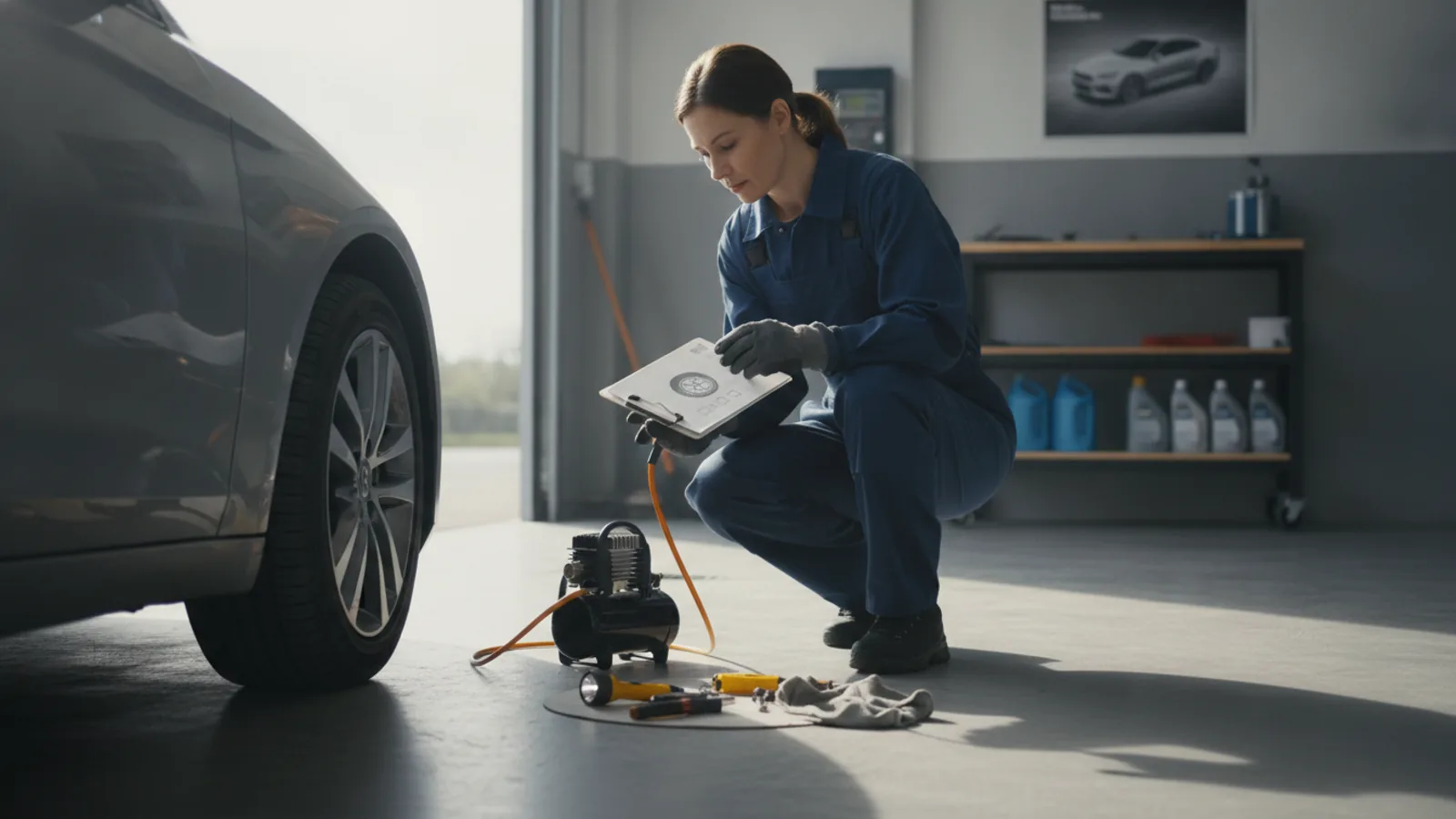
- Gather a reliable tyre pressure gauge, an air compressor or pump, and a valve cap remover if needed.
- Find the manufacturer's recommended pressure for your vehicle, usually listed on a sticker inside the driver's door frame or in the owner's manual.
- Ensure the tyres are cold, meaning the vehicle hasn't been driven for at least three hours or has traveled less than one mile.
- Clear the area around the valve stems and have a flashlight available for better visibility.
Step-by-Step Instructions
Check Tyre Condition Before Any Pressure Reading
Start by visually inspecting each tyre for cuts, cracks, bulges, or objects embedded in the tread. Run your hand carefully over the surface to feel for any unevenness, and look for any signs of dry rot or sidewall damage. Also, check the tread depth using a simple tread depth gauge or the penny test: insert a coin with Lincoln's head down into the tread; if you can see the top of his head, the tread is too shallow. This is essential because a tyre with structural damage or low tread may lose air quickly, and reading pressure without noticing these issues could lead to driving on a dangerous tyre. Any damage means the tyre should be inspected by a professional, not just refilled.
Locate the Correct Pressure Specification
Find the recommended tyre pressure for your vehicle. This is usually printed on a sticker located in the driver's side door jamb, inside the fuel filler flap, or in the owner's manual. Do not use the maximum pressure printed on the tyre sidewall, as that is the maximum loading pressure, not the recommended pressure for your car. The recommended pressure is based on the vehicle's weight and tyre size, and using the wrong pressure can lead to uneven wear, reduced fuel economy, and poor handling. If you cannot find the sticker, check the owner's manual or contact the vehicle manufacturer. Never guess, as over- or under-inflation reduces tyre life and safety.
Ensure Tyres Are Cold
For an accurate reading, the tyres must be cold. This means the vehicle has not been driven for at least three hours, or has been driven less than a mile at a time. Driving heats the air inside the tyre, increasing pressure, so a reading from a warm tyre will be higher than the true cold pressure. If you must check after a drive, wait until the tyres cool down, or adjust the reading by adding roughly 1 psi for every 10 degrees Fahrenheit (5.6 degrees Celsius) increase in ambient temperature. Checking cold tyres ensures your readings are consistent with the manufacturer's specification, which was set for cold conditions. Ignoring this step can result in you unknowingly under-inflating your tyres, which increases rolling resistance and fuel consumption.
Remove Valve Caps and Clean Valve Stems
Unscrew the valve caps and place them in a safe spot where they won't roll away. Before attaching the gauge, clean the valve stem with a cloth or a small brush to remove any dirt or debris. This ensures a good seal between the gauge and the valve, giving you a true reading. Dirt can also push into the valve, causing a slow leak. Additionally, check the valve stem for any cuts or cracks, and make sure the core is tight. A faulty valve stem can allow air to escape slowly, so even if you fill the tyre to the correct pressure, it may lose air quickly. If the valve stem looks damaged, have it replaced before continuing.
Measure and Adjust Tyre Pressure Accurately
Press the tyre pressure gauge firmly onto the valve stem and read the pressure. Ensure the gauge is level and you get a hissing sound only if air is escaping, which means you need to press harder. Compare the reading to the recommended pressure. If it is too low, add air until it reaches the correct level. If it is too high, release air by pressing the pin in the center of the valve until the reading matches. It is important to check all four tyres, as they often lose air at different rates. Under-inflation causes excessive flexing and heat, which can lead to blowouts, while over-inflation reduces grip and causes premature center tread wear.
Replace Valve Caps and Record Your Readings
After adjusting all tyres, screw the valve caps back on tightly to keep out dirt and moisture. Consider noting the final pressures in a small notebook or a smartphone app to track patterns over time. This helps you spot slow leaks early. If you notice a tyre needs frequent refilling, it's a sign of a puncture or valve issue that should be fixed. Also, check the pressure of the spare tyre if your vehicle has one, as it may not be checked regularly and could be flat when you need it. Remember that tyres naturally lose about 1 psi per month, so regular checks are part of routine maintenance.
Quick Reference
| Situation | Action | Why it helps |
|---|---|---|
| You're about to check pressure after a long drive. | Wait at least three hours with the car parked, or drive less than a mile to the gas station, then check the pressure. | Driving heats the tyres and increases pressure, so a reading from a hot tyre will be higher than the true cold pressure, leading to under-inflation if you follow it. |
| The recommended pressure sticker is missing from the door jamb. | Check the owner's manual under the tyre section or look for a sticker inside the fuel filler flap. | The correct pressure is specific to your vehicle's weight and tyre size; using the maximum on the sidewall is unsafe and leads to poor handling. |
| You find a tyre with a nail or a visible cut. | Do not attempt to refill it; have the tyre inspected by a professional, as it may be unsafe to drive on. | Damage like this can cause sudden deflation or a blowout, and a simple air refill won't fix the underlying problem. |
Common Issues
- The tyre keeps losing pressure even after refilling.: Check the valve core is tight and using a valve cap. Then apply soapy water to the valve and tyre surface to look for bubbles. If you find a bubble, the leak is there. Professional repair is needed.
- The pressure gauge gives a different reading every time.: Use a high-quality digital or dial gauge and test it on a known tyre at a service station. If readings vary, your gauge may be faulty. Also, ensure you're pressing the gauge straight onto the valve to avoid air loss.
- You notice uneven wear on the tread after checking pressure.: Uneven wear can be a sign of incorrect pressure, misalignment, or suspension issues. Compare your pressure readings to the specs and adjust accordingly. If the problem persists, get a wheel alignment check.
Advanced Tips
- Invest in a high-quality digital gauge with a bleeder valve for precise control when releasing air.
- Consider using nitrogen instead of regular air for better pressure retention, but note that it's not required for everyday driving.
- If you frequently drive on rough roads, consider using tyres with reinforced sidewalls and check pressure more often.
Final Checklist
- Tyres are cold (not driven for at least three hours).
- All valve caps are removed and valve stems are clean.
- Read the recommended pressure from the vehicle's sticker or manual.
- Use a reliable gauge to check and adjust pressure, then record the readings.
FAQ
Should I check tyre pressure when the tyres are hot or cold?
Always check when cold, meaning the vehicle hasn't been driven for at least three hours. The heat from driving increases pressure, so a hot reading is not accurate. If you've driven more than a mile, wait for the tyres to cool before checking, or add air accordingly.
What is the best way to find the correct pressure for my car?
Look for a sticker on the driver's side door jamb or inside the fuel filler flap. It lists the recommended pressure for your vehicle's original tyre size. If you can't find it, check the owner's manual or contact the manufacturer. Avoid using the maximum pressure number on the tyre sidewall.
Can I use the air pump at a gas station to fill my tyres?
Yes, but gas station gauges can be inaccurate. Use your own gauge to measure after filling, and adjust as needed. Also, be aware that the pump may overheat or be out of service, so have a backup plan such as a portable compressor.